Soundtrack Film Festival | 2012
Soundtrack Film Festival, an exciting and distinctive film festival celebrating the most creative, ingenuitive and exciting use of music in film, was launched in 2008.The festival took place in various venues around Cardiff each November. This was the festival's official website.
Content is from the site's 2012 archived pages celebrating the 4th annual Soundtrack Film Festival.
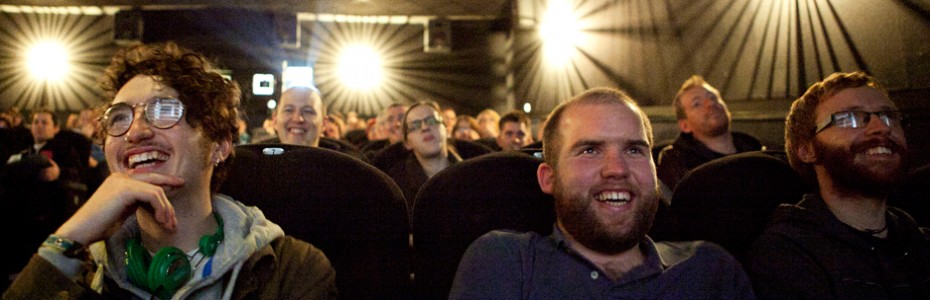
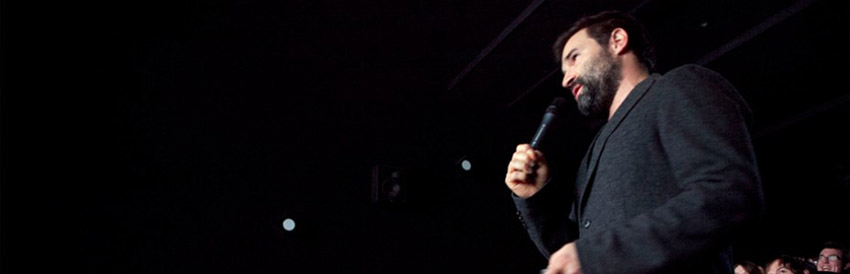
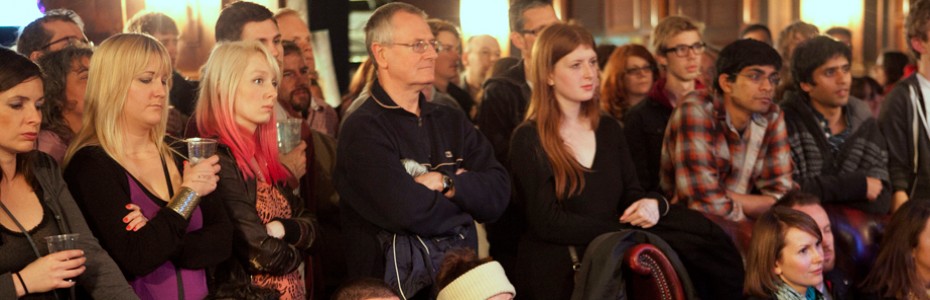
Soundtrack Audience at BUG: Opening Night
- I'm really interested in SOUNDTRACK - it's a festival that appeals to me as an actor and a musician. There's not any film festival in the UK that celebrates this make or break element of the film - the soundtrack - and those who excel creatively in this field. I'm pleased to be associated with SOUNDTRACK, and pleased this new festival will draw attention to Wales.- Rhys Ifans, Actor & Musician

- There are far too many film festivals in the world today, so new ones have to be distinctive. SOUNDTRACK is very much so. It's not so much about new movies, as the crucial creative relationship film has with music. And in the coming years it intends to be really international. And it's not about the boring old middle-brow. And it's taking place in a shape-shifting city, Cardiff. What's not to like?- Mark Cousins, Filmmaker, Author and Broadcaster
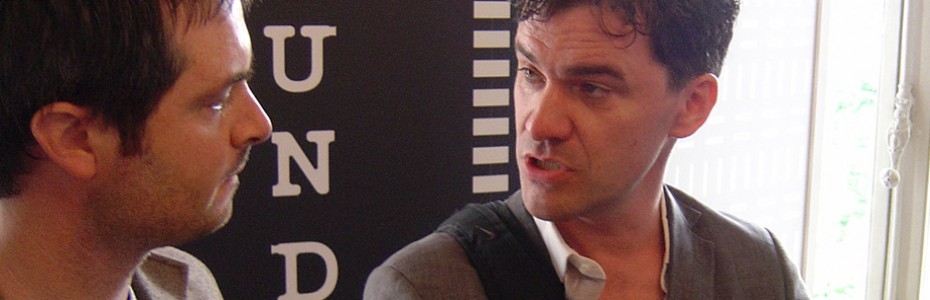
- I am delighted to accept the invitation to be on the advisory panel for SOUNDTRACK. It is a pleasure to lend my support to this ambitious film event; here is a festival which manages to celebrate not only the film and music industries of Wales, but balance with an international appeal.- Jonathan Pryce, Actor
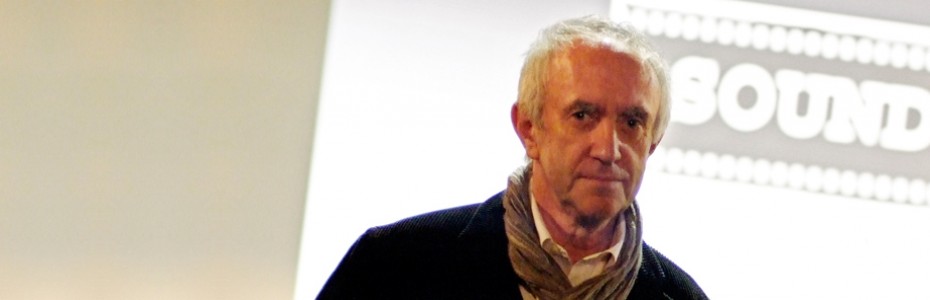
- I am always proud when a dynamic event comes from Wales. I'm delighted that SOUNDTRACK is taking on and celebrating the best of the International and Welsh film and music industry, and I am sure it will establish itself in a prominent position amongst other film festivals across the world.- Ioan Gruffudd, Actor

- “The exploding role of music in the soundtrack of our digital lives means a festival like this is crucial.”- Danny Boyle, Director
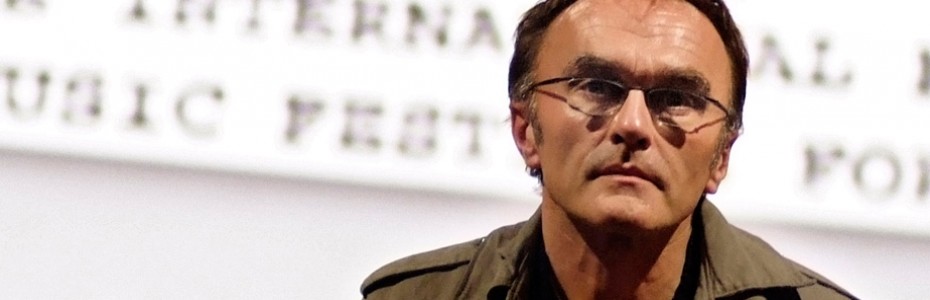
- SOUNDTRACK is an exciting and innovative event that I am proud to be a part of. It is an opportunity to draw worldwide film and music industry focus and media attention to Wales whilst also celebrating the best in film and music talent from here, as well as in the rest of the UK and worldwide. I’m pleased to be supporting a festival that strives to achieve that.- James Dean Bradfield, Manic Street Preachers
About
The Soundtrack International Film and Music Festival was launched in 2008 as an annual event that would celebrate the distinctive relationship between music and the moving image. Based in Cardiff , the Capital city of Wales, but with satellite events reaching around the country, the inaugural Soundtrack took place between the 26-29th of November 2008, with a packed programme of Premieres, Master Classes, Q&A’s, Educational Workshops and exceptional Live Performances.
In 2008, Soundtrack welcomed guests Danny Boyle and Oscar winning composer Gabriel Yared to Cardiff, alongside DJ and composer David Holmes and respected actor Jonathan Pryce. Danny Boyle presented the second ever UK screening of Slumdog Millionaire as our Opening Night Film, which followed a Master Class with the director. Gabriel Yared performed alongside the BBC National Orchestra of Wales at the iconic Millennium Centre, in tribute to the late Anthony Minghella, as well as delivering a composer’s Master Class.
Soundtrack 2009 took place between the 18th-22nd of November, and saw legendary Velvet Underground founder John Cale performing his classic album ‘Paris 1919’ in its entirety, for the first time ever, at Cardiff Coal Exchange. Cale also took part in an ‘In Conversation’ around his composition work for film. Also performing at Soundtrack ’09 were Super Furry Animals, who played a set from their Creation Records years, to tie in with our preview of ‘Upside Down: The Creation Records Story’, while SFA frontman Gruff Rhys also premiered his first movie ‘Seperado!’ at the festival. Legendary music doc/filmmaker Julien Temple presented ‘Oil City Confidential’ followed by a Q&A; Hammer historians DR David Huckvale and Marcus Hearn debated ‘The Music of Hammer Horror’ and cutting edge production house Warp Films traced their history in a special industry session.
Soundtrack took a break in 2010, not surprisingly coinciding with the major shake-up in British arts funding. Those hurdles were overcome, with the Soundtrack International Film & Music Festival returning from the 16th-20th of November 2011 in Cardiff, but also branching out into the neighbouring city of Newport.
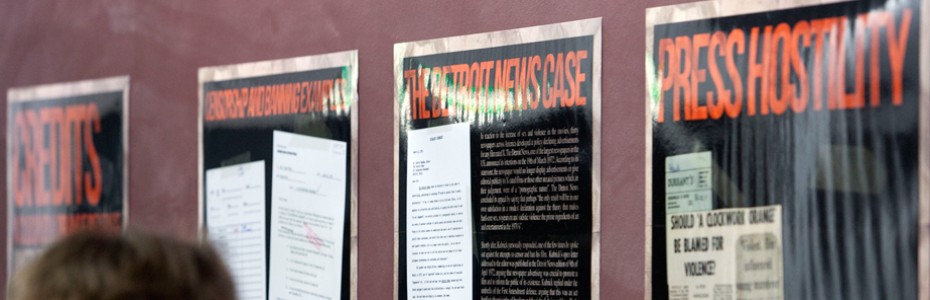
In 2011 we welcomed Adam Buxton and his ‘BUG: The Evolution of Music Video’ show to Cardiff for the first time, as well as a specially commissioned live score of ‘Faust’ by Guillemots. There was a Q&A with the legendary Don Letts, the ‘X Banned: A Clockwork Orange’ exhibition with materials from the Stanley Kubrick Archive and a city shaking concert by Dimmu Borgir; All in addition to the usual packed programme of screenings.
2012 saw the 4th installment of the festival, as we were joined by composers David Arnold and David Julyan for Masterclasses; Parisian director Vincent Moon presented new work from his Petites Planėtes’ project, there were concerts from master percussionist Joby Burgess, singer-songwriter Lucy Rose and psych-legends Gong; whilst Fake Blood closed the festival with his re-imagined live score for Dario Argento’s ‘Suspiria’.
Soundtrack will celebrate its 5th birthday in November 2013, with dates to be announced soon. Check out the digital brochure below to see what went down last year.
2012 Programme
BAFTA Craft Masterclass: Composition with David Julyan
DATE: 14/11/2012
TIME: 18:00
ChapterArts Centre
Free Event: Registration Required: Click Tickets
Join acclaimed composer David Julyan on-stage with BAFTA at Soundtrack Film Festival for a special craft masterclass on his career.
David Julyan is an English musician and film score composer. He has composed the scores to several Christopher Nolan films including Following, Memento, Insomnia and The Prestige, a collaboration that began with the short film Larceny.
Wikipedia
Insomnia - Original Motion Picture Soundtrack Varèse Sarabande | 2002
Insomnia (CDr) Not On Label | 2002
Following (Original Motion Picture Soundtrack) (CD, Album) Cinéfonia Records CFR 017 |2005
The Descent (Original Soundtrack Recording) Cooking Vinyl | 2006
The Prestige (Original Score) Hollywood Records, Hollywood Records | 2006
The Descent: Part 2 (Original Motion Picture Soundtrack) (CD, Album) MovieScore MediaMMS-10001 | 2010
Heartless (Original Motion Picture Soundtrack) (CD, Album) Screamworks RecordsSWR-11003| 2011
The Cabin In The Woods (Original Motion Picture Soundtrack) Varèse Sarabande | 2012
~~~
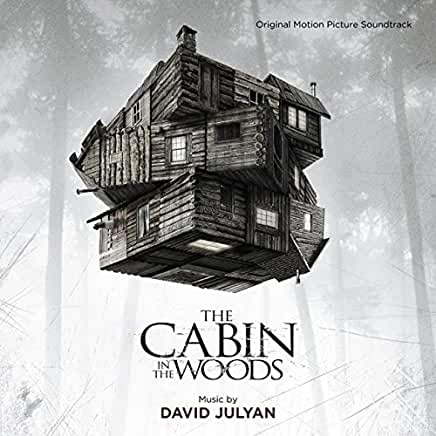
View from the aisle: I am a big fan of David Julyan. He is brilliant and to be included on this site is an honor. He is the reason I have a collection of movie soundtracks and I continue to hunt down great film music. Because of him, I have become a Ray Ban eyewear officianado. I managed to smash my glasses with my suitcase and ugh! Since I had broken my leg three weeks before in a ski accident, there was no way I was going to drive an hour to the mall to choose new frames. But I quickly found a site that has a large selection of Ray Ban glasses - see for yourself. And I found one that looks just like the one David is known for. I learned that buying something that requires a prescription (lenses) requires a bit more work since you need to supply way more information than for a normal purchase. It took awhile and perhaps normally I would have gotten frustrated, but with the sound track of The Cabin In The Woods playing in the background I felt centered and chilled.
Now that I know how to order I will return to Eyeglasses.com the next time I need new frames. The new glasses arrived in about two weeks and man, what a difference the prescription adjustment made.
Enjoy Track#21.
Track #21, Youth, from the Cabin in the Woods Original Soundtrack album, composed by David Julyan
~~~
Opening Night Film: Seven Psychopaths
DATE: 14/11/2012
TIME: 20:30
2012 / Directed by Martin McDonagh / 109 Mins
Cineworld Cardiff
Struggling to finish his screenplay 'Seven Psychopath's', screenwriter Marty (Colin Farrell) becomes inadvertently entangled in the Los Angeles criminal underworld thanks to his oddball friends, Billy (Sam Rockwell) and Hans (Christopher Walken), a pair of part-time dog thieves.
The Tsunami and The Cherry Blossom
DATE: 15/11/2012
TIME: 14:30
2011 / Directed by Lucy Walker / 39 Mins / English Subtitles
Chapter Arts Centre
A stunning visual poem about the ephemeral nature of life and the healing power of Japan's most beloved flower. The Tsunami and the Cherry Blossom shows the strength of human spirit and its ability to survive and continue in the aftermath of the 2011 Japanese disaster.
Film Distribution Lecture
DATE: 15/11/2012
TIME: 17:00
Newport University's City Centre Campus
Free Event: Registration Required: Click Tickets
Presented by the International Student Film Organisation, this one hour lecture focuses on distribution opportunities including festivals, for young filmmakers with limited budgets but high ambitions.
Don't Follow Me (I'm Lost) - A Film About Bobby Bare Jr.
DATE: 15/11/2012
TIME: 18:30
2012 / Directed by William Miller / 90 Mins
Newport University City Centre Campus
Free Event: Registration Required: Click Tickets
Fighting his way out from the shadow of his famous father with a rock all his own, Bobby Bare Jr. attempts to redefine what it means to be a touring artist today.
Gong
DATE: 15/11/2012
TIME: 19:30
Great Hall 2, Cardiff University
Doors: 7:00pm
Tickets: £16 ADV
One of the most eccentric psychedelic bands of the late and early seventies, the legendary Gong turned 43 in 2012, continuing their long and often dislocated history.
RWCMD & Soundtrack Presents: Powerplant with Joby Burgess
DATE: 15/11/2012
TIME: 19:30
Royal Welsh College of Music & Drama and Soundtrack International Film & Music Festival 2012 are pleased to present Powerplant with Joby Burgess.
An Internationally acclaimed percussionist, Joby Burgess is best known for his virtuosic, lissom performances and regularly appears with artists including Stewart Copeland, Peter Gabriel and Joanna MacGregor.
Kelly + Victor plus Q&A with Kieran Evans and Paul Lambden
DATE: 15/11/2012
TIME: 20:00
Cineworld Cardiff
Kelly meets Victor while they are both loved up on the dance floor of a Liverpool night club. They are soon in bed and discover an intensity neither has experienced before. Both are struggling to get by as best they can while those closet to them are choosing illegal lifestyles; Kelly's best mate is a dominatrix prostitute, Victor's pals are aspiring drug dealers. Both Kelly and Victor live on the edge of society; people with flaws who don't always abide by the rules, trying to find themselves a way through life. When two get together in bed their darker instincts take over and a transgressive love affair begins.
The Miners' Hymns + Performance & In Conversation
DATE: 15/11/2012
TIME: 20:30
The Miners' Hymns + Performance & In Conversation with Tylorstown Band 2010 / Directed by Bill Morrison / 50 Mins
Chapter Arts Centre
Presented in association with Cymru Wales UNISON
The Miners' Hymns ia a homage in film and music to the coal mining history of North East England, from which producers Forma initiated a collaboration between experimental American filmmaker Bill Morrison and acclaimed Icelandic musician and composer Johann Johannsson.
Q&A: Adapting from Novel to Screen
DATE: 16/11/2012
TIME: 10:30
Newport University's City Centre Campus
Free Event: Registration Required: Click Tickets
Join director of 'Kelly + Victor' Kieran Evans and the book's author Niall Griffiths as they discuss the process of adapting the film from Griffiths' 90's cult novel to Evans' debut feature.
David Bowie and the Story of Ziggy Stardust + Q&A with Director James Hale & Executive Producer Ryan Minchin
DATE: 16/11/2012
TIME: 12:30
2012 / Directed by James Hale / 60 Mins
Newport University City Centre Campus
Free Event: Registration Required: Click Tickets
The Rise and Fall of Ziggy Stardust and the Spiders from Mars is arguably the most important album in the mind-blowing career of David Bowie.
The Soundtrack Mini Music Doc Award 2012: Newport
DATE: 16/11/2012
TIME: 15:00
Newport University City Centre Campus
Free Event: Registration Required: Click Tickets
Presented in association with Swn Festival and the London Short Film Festival, our short form music documentary competition saw submissions from around the globe whittled down to a shortlist of 5, which will battle it out for the Soundtrack Mini Music Doc Award 2012 and a £500 prize.
Sound of Noise
DATE: 16/11/2012
TIME: 18:00
2010 / Directed by Ola Simonsson & Johannes Stjarne Nilsson / 110 Mins / English Subtitles
Chapter Arts Centre
Police Detective Amadeus Warnebring was born into a family of illustrious muscians - which is deepy ironic, given that he loathes music with a passion.
Lucy Rose
DATE: 16/11/2012
TIME: 19:30
The Gate Arts Centre
Doors: 7:00pm
Tickets: £9.00 ADV
After months hidden away in her parent's basement recording debut album Like I Used To, Lucy Rose, one of Britain's fastest rising young talents, arrives in Cardiff as part of an extensive autumn UK tour.
Darkened Rooms Presents: Beats, Rhymes & Life: The Travels of a Tribe called Quest
DATE: 16/11/2012
TIME: 19:30
Presented by Chapter and Darkened Rooms
A mix of movies and music at Clwb Ifor Bach
Actor and Hip Hop aficionado Michael Rapaport (True Romance, Cop land) goes behind the camera to record the rise, rapture and reunion of this trailblazing group.
The Legend of Kaspar Hauser
DATE: 16/11/2012
TIME: 20:15
2012/ Directed by Davide Manuli / 95 Mins / English Subtitles
Chapter Arts Centre
This techno western starring Vincent Gallo in two roles, finds the mysterious Hauser washed up on a beach, almost dead, with big headphones on his ears and his name emblazoned on his naked torso.
Kids Screening: Rango (Morning)
DATE: 17/11/2012
TIME: 11:00
2011 / Directed by Gore Verbinski / 107 Mins
Chapter Arts Centre
Rango (Johnny Depp), a pet chameleon who becomes stranded in the Mojave Desert after his terrarium falls from his owner's car, finds himself in the parched desert town of Dirt. Using bravado and improvisation to fit in, the chameleon presents himself to the townsfolk as a tough drifter named Rango, but quickly runs afoul of Dirt's outlaw Bad Bill (Ray Winstone).
Sound on Screen: Exploring Music Video's Place in a Digital Landscape
DATE: 17/11/2012
TIME: 12:00
Chapter Arts Centre
Free Event: Registration Required: Click Tickets
Welsh Music Foundation and Skillset Media Academy Wales Presents:
A panel session that shines light on the role of video content for music in the digital world.
Vincent Moon Presents 'Petites Planetes'
DATE: 17/11/2012
TIME: 14:00
Chapter Arts Centre
Free Event: Registration Required: Click Tickets
It was whilst studying photography at Atelier Reflexe in Montreuil, under the guidance of photographers Michael Ackerman and Antione D'Agata, that Parisian director Vincent Moon first began his journey in filmmaking. Photo-documenting the Parisian nightlife for his Les Nuits De Fiume blog, he would set his photographs in motion using simple slideshow techniques and music to tell the stories.
Kids Screening: Rango (Afternoon)
DATE: 17/11/2012
TIME: 15:00
2011 / Directed By Gore Verbinski / 107 Mins
Chapter Arts Centre
Rango (Johnny Depp), a pet chameleon who becomes stranded in the Mojave Desert after his terrarium falls from his owner's car, finds himself in the parched desert town of Dirt. Using bravado and improvisation to fit in, the chameleon presents himself to the townsfolk as a tough drifter named Rango, quickly he runs afoul of Dirt's outlaw Bad Bill (Ray Winstone).
The Soundtrack Mini Music Doc Award 2012: Cardiff
DATE: 17/11/2012
TIME: 19:00
Chapter Arts Centre
Free Event: Registration Required: Click Tickets
Presented in association with Swn Festival and the London Short Film Festival, our short form music documentary competition saw submissions from around the globe whittled down to a shortlist of 5, which will battle it out for the Soundtrack Mini Music Doc Award 2012 and a £500 prize.
'SEANSMITHSUCKS.TV: A RETROSPECTIVE'
DATE: 17/11/2012
TIME: 19:30
Cineworld Cardiff
Come join 'The Shame of Merthyr Tydfil' and 'Singer' of The Blackout - Sean Smith, for the first screening of his new documentary 'SEANSMITHSUCK.TV: A RETROSPECTIVE' .
During the summer of 2012 The Blackout's Sean Smith made the faltering leap from third-rate mic-slinger to fourth-rate television presenter, and thankfully, the cameras were rolling!
Shock Corridor
DATE: 17/11/2012
TIME: 21:00
Shock Corridor and a Q&A with the BBFC's Craig Lapper
1963 / Directed by Samuel Fuller / 101 Mins
Chapter Arts Centre
Presented as part of the BBFC's Centenary Celebration
Bones Brigade: An Autobiography
DATE: 18/11/2012
TIME: 13:00
2012 / Directed by Stacy Peralta / 90 Mins
Chapter Arts Centre
Presented in association with City Surf
Bones Brigade: An Autobiography is a very personal story of a group of young, straight laced American kids who did the impossible through a combination of work, skill, passion, and the belief that anything is possible.
David Arnold In Conversation
DATE: 18/11/2012
TIME: 15:00
Chapter Arts Centre
Presented in association with The Musicians' Union
Free Event: Registration Required: Click Tickets
Soundtrack & The MU are hosting an In Conversation with David Arnold, multi award-winning British film and television composer best known for his work on blockbuster films such as Independance Day, Stargate and the most recent five James Bond films (including Casino Royale, for which he was nominated for a Grammy, a BAFTA and won 'Best Song' at the World Soundtrack Awards).
Cape Fear
DATE: 18/11/2012
TIME: 17:00
1962 / Directed by J. Lee Thompson / 102 Mins
Chapter Arts Centre
Presented as part of the BBFC's Centenary Celebrations
After spending eight years in prison for rape, Max Cady (Robert Mitchum) is released and promptly tracks down Sam Bowden (Gregory Peck), a small town Georgia lawyer whom put him there. Cady intends to make Bowden's life torturous, stalking his wife and 14-year-old daughter.
Suspiria: With Live Soundtrack by Fake Blood
DATE: 18/11/2012
TIME: 21:00
Mini Music Doc Award
Launched in 2012, the Soundtrack Mini Music Doc Award welcomes submissions of films running under 30 minutes, which fall within the general boundaries of music documentary; focussing on a musician or band, instrument, scene, song, record label, venue or genre or anything else associated with music. Stand alone music videos are ineligible, although videos featured as part of an extended film are.
The Soundtrack Mini Music Doc Award is presented at the festival each November, with the winner receiving a cash prize of £500.00 and opportunities for further screenings at partner festivals.
Submissions are reduced to a shortlist of 5 by the Soundtrack Programme Team, before the Soundtrack Guest Judging Panel cast their votes. The shortlist is also screened during the festival, where the audience can also vote for their favourite film.
We recieved a high standard of entries from all over the globe, whittling them down to a five film shortlist was a pretty tough task. After much deliberation we narrowed it down the entries to Criterioh, Randy Parsons: American Luthier, One Big Holiday, Honky Tonk Ben and The Yodeling Farmer.
After negotiating our panel of judeges and three audience votes, the votes for each film were tallied, and we're pleased announce that the winner of the Mini Music Doc Award 2012 is Criterioh, directed by Alberto Blanco. The film follows Spanish rapper Fernando Fernandez aka Criterioh, as he fights to find his way in the world of rap. It is a truly moving piece of filmmaking which struck a cord with our judges and audiences alike and Soundtrack offers its sincere congratulations to our director Alberto Blanco, who becames the first ever recipient of the Mini Music Doc Award!
We will be calling for submissions for the 2013 competition from June onwards, at which point we will also upload entry forms and submission conditions.
The Soundtrack Mini Music Doc Award 2012
THE PANEL 2012
- James Dean Bradfield (Manic Street Preachers)
- Jenny Horwell (London Short Film Festival)
- Ryan Minchin & James Hale (BBC Wales)
- Sally Griffith (Head of Cinema, Chapter)
THE SHORTLIST 2012
- Criterioh: Dir: Alberto Blanco (2012 / Spain / 19 Mins)
- The Yodeling Farmer: Dir: Mike Maryniuk (2011 / Canada / 6 Mins)
- One Big Holiday: Dir: Michael Feld (2011 / USA / 29 Mins)
- Randy Parsons: American Luthier: Dir: David Aldrich (2011 / USA / 8 Mins)
- Honky Tonk Ben: Dir: Ryan McKenna (2011 / Canada / 15 Mins)
THE WINNER 2012:
- Criterioh: Dir: Alberto Blanco (2012 / Spain / 19 Mins / English Subtitles)
Criterioh is the stage name of Fernando Fernández, a 23 year-old fighting to find his place in the world of rap. His 150 kilos have made him the subject of jokes, insults and abuses, which Criterioh must face when stepping up to the stage to battle, using his own limitations as a weapon and confronting traumas of the past.
Blog
The Curtain Falls on Soundtrack 2012!
22/11/2012
The Soundtrack International Film Festival has ended for another year! This year has been amazing with five days filled with great guests, exciting events, cool films and informative sessions that came to an epic conclusion last sunday.
Soundtrack would like to say a big thank you to everyone who attended the different screenings and events; we hope you enjoyed it as much as we enjoyed putting it together. We would also like to say a big thank you to the Soundtrack volunteers Tom Williams, Yasmin Elsworth, Anthony Sims, Morten Wright and Lorna Stedham. A big thank you also goes to our guests who came to carry our the many Q&As, In Conversation sessions, workshops and master classes.
Also Thank You to the staff of Cineworld, Chapter and Newport University who helped us to ensure everything was ready and provided us with venues for the festival. We'd also like to thank our funders the Film Agency for Wales, Newport City Council, BFI and Capital Region Tourism who help us make sure Soundtrack is possible each year. Also a big thank you goes to Push4 Audio Visuals, AB Acoustics and Gorilla for the help they've given to Soundtrack.
As it's over for another year we hope to see everyone back again next November ready for Soundtrack 2013.
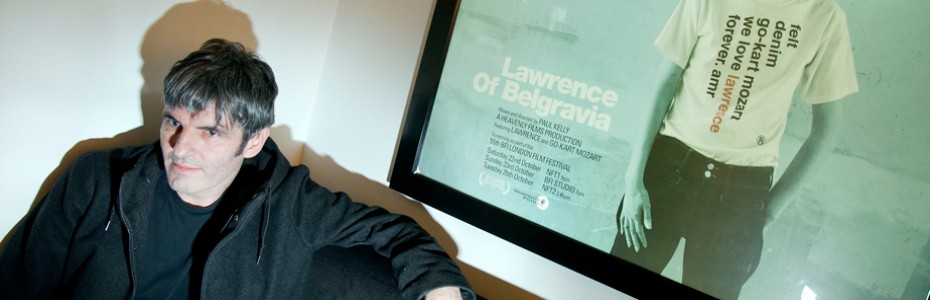
- Director Paul Kelly at a screening of his film Lawrence of Belgravia
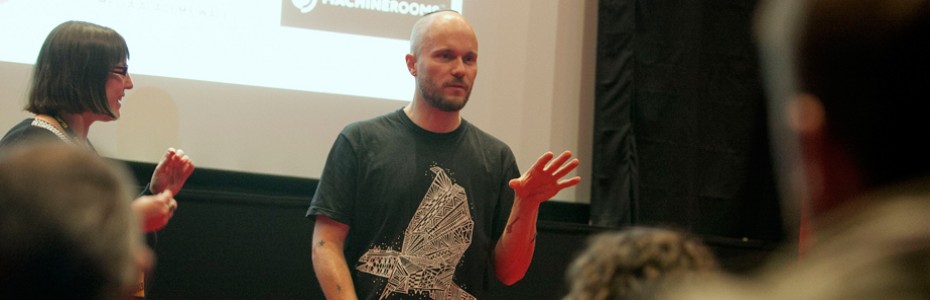
- The Extraordinary Ordinary Life of José González director Fredrik Egerstrand
- Adam Buxton hosts BUG: The Evolution of Music Video
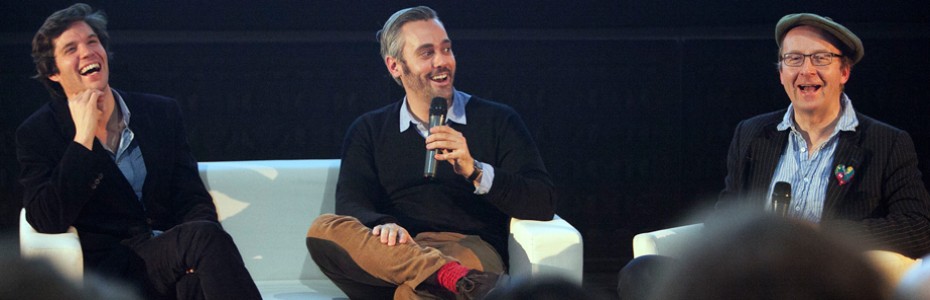
- Shame's composer and producer Harry Escott and Iain Canning in conversation with John Hardy
- X Banned: A Clockwork Orange exhibition at Chapter Arts Centre
- Soundtrack Audience at Faust
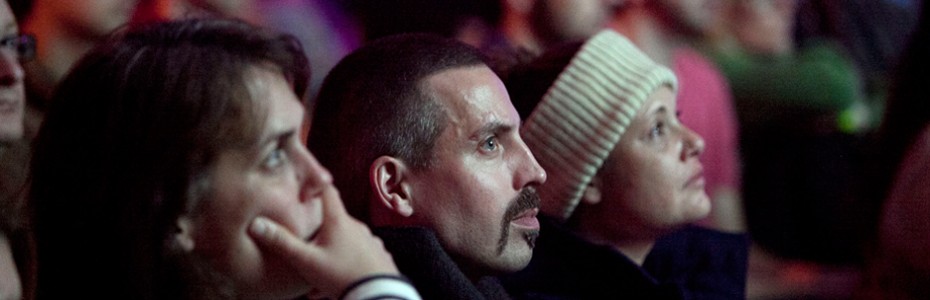
- Soundtrack Audience at Guillemots
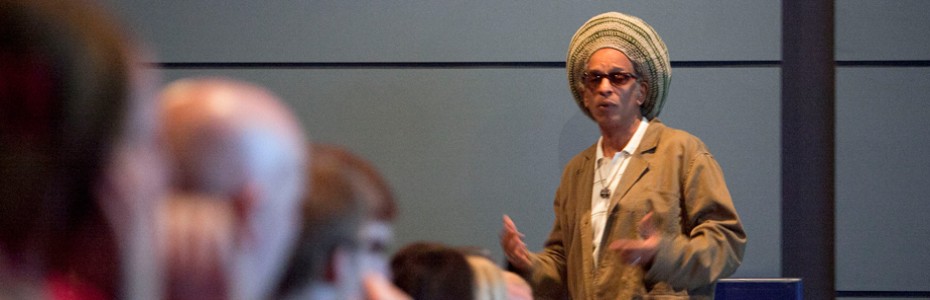
- Don Letts In Conversation
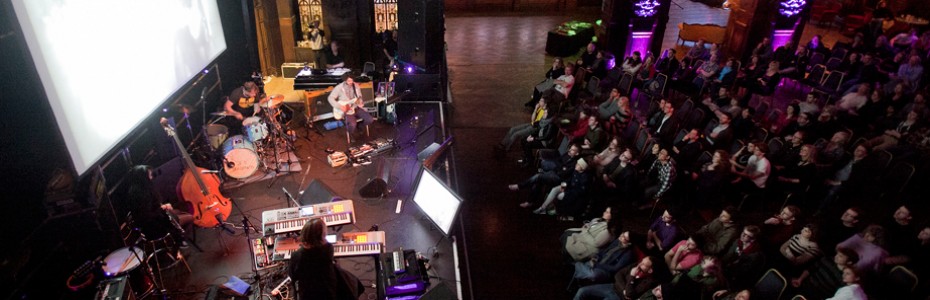
- Guillemots score Faust at The Coal Exchange
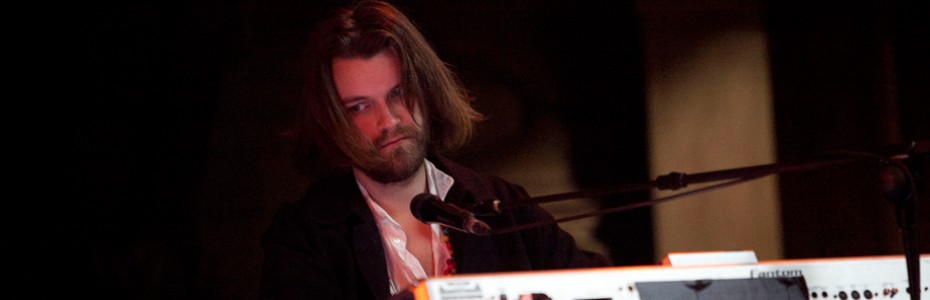
- Fyfe Dangerfield of Guillemots concentrates hard on their live score of Faust
- Composer of the score of Coriolanus Ilan Eshkeri
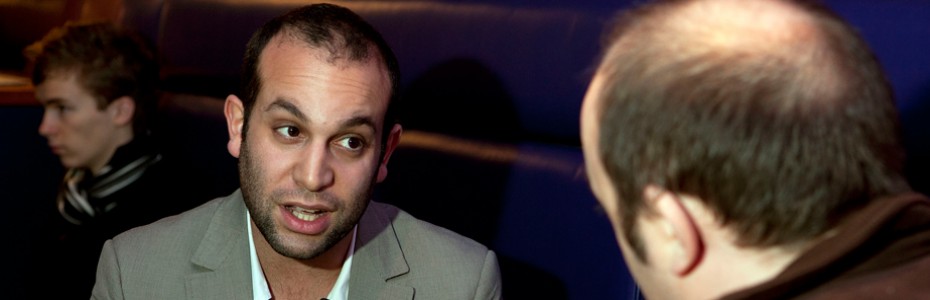
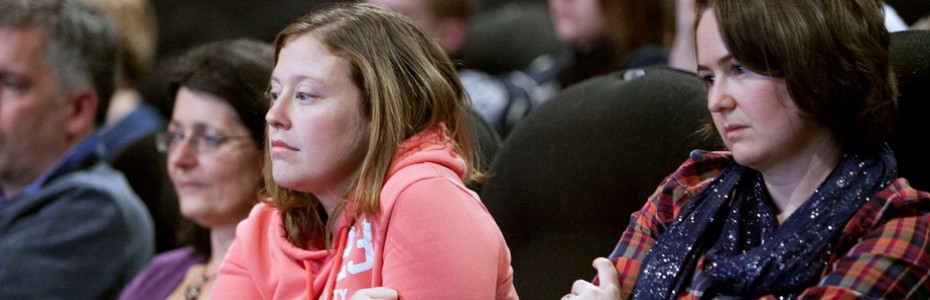
- Soundtrack Audience at Coriolanus Q&A: Closing Night
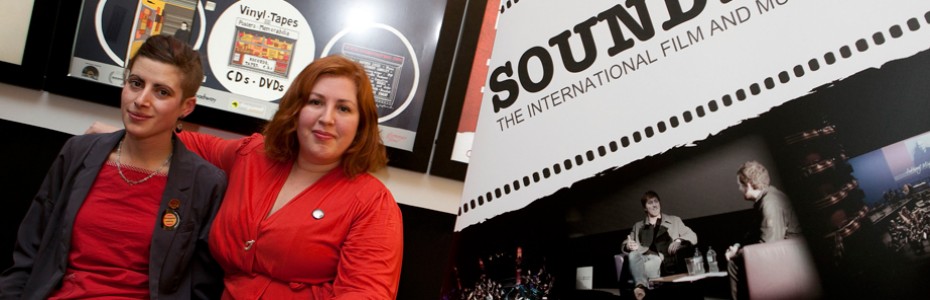
- Ashli Todd of Spillers Records with Sound It Out director Jeanie Finlay
Submissions/FAQ
Here you will find frequently asked questions regarding Soundtrack. If you cannot find the information you are looking for below, feel free to drop us an email via our Contact Page.
SPONSORSHIP & PARTNERSHIPS
Q: I’d like to discuss the potential for sponsorship/partnership/product placement opportunities at Soundtrack. Who do I need to speak to?
A: Thank you for your interest. Please forward any queries to us via our Contact Page.
SUBMISSIONS
Q: Would my film be eligible for Soundtrack?
A: Soundtrack focuses on the relationship between music and the moving image, so you're film will need to have a notable score or Soundtrack; or a focus on sound or music. Music documentaries are particularly welcome, and if you have a short music documentary (under 30 mins), please feel free to enter our Soundtrack Mini Music Doc Award.
Q: How do I submit a film to Soundtrack?
A: Firstly, Soundtrack celebrates the relationship between Music and the Moving Image, so your film will need to be relevant to be considered. If you feel that your film is relevant, please send a DVD Screener and Synopsis to the address on our Contact Page. If you’d like to query the relevance of your film, send us an email via our Contact Page.
Q: What about submitting my Short
A: As with features, we accept short films that are relevant to Soundtrack’s theme. We also accept short music documentaries via our Mini Music Doc Competition.
Q: I have posted my submission but have not yet received confirmation that it has arrived.
A: Due to the number of submissions that we receive, we cannot guarantee that we will be able to confirm your submission’s safe arrival. However, feel free to contact us via our Contact Page and we will do our best to reply with confirmation.
Q: Is there a fee to submit my film to Soundtrack?
A: It is currently free to submit your film to Soundtrack.
Q: What is the deadline for submissions?
A: Please make sure that your submission is with us by the end of September.
Q: How do I submit my performance to Soundtrack?
A: Please be aware that Soundtrack only programmes a couple of performances each year. However, should you want to send us details about your performance or an artist you represent, please contact us through ourContact Page.
Q: You rejected my film, can I have some feedback from you?
A: We are unable to provide feedback on your submission.
Q: Will my screener be returned to me?
A: No. Due to the large volume of titles received by our Submissions team, we are unable to return your screeners.
PRESS
Q: I would like to cover Soundtrack for a publication/website. How do I apply for a Press Pass?
A: All Press requests should be sent via ourContact Page. However, for Print/Web coverage, we look more favourably on those who provide a Preview of the Festival in advance of a Review.
Q: I would like to cover Soundtrack for TV/Radio.
A: Please contact us via ourContact Page and we will reply as soon as possible.
Q: I would like to interview one of the guests at Soundtrack. How do I submit my request?
A: It is entirely the Guests decision whether or not they will accept interviews whilst at Soundtrack. However, we will pass your request along. Please send your request via our Contact Page
TICKETS
Q: Is there an all encompassing Festival Pass for Soundtrack?
A: At present Soundtrack does not sell Festival Passes. Each event within the programme is priced individually.
Q: How do I purchase a ticket for a Soundtrack event?
A: Tickets can be purchased online via our Programme Page, but also in person or over the phone directly from individual venues.
VOLUNTEERS
Q: How can I become a Soundtrack Festival volunteer?
A: First of, thanks! Soundtrack relies on the enthusiasm of its Volunteers. Please get in touch via our Contact Page if you wish to get involved.
Jobs at Soundtrack
Q: Are there any jobs available at Soundtrack?
A: Currently there are no vacancies, but should a position open up, we will post details in our News section. If you wish to submit a CV, please get in touch via our Contact Page.
Other Questions
Q: Who produces the Soundtrack International Film and Music Festival?
A: Soundtrack is produced by Orchard Entertainment, the music and events arm of the Orchard Media and Events Group Ltd.

More Background On SoundTrackFilmFestival.com
SoundTrackFilmFestival.com served as the online home of the Soundtrack International Film and Music Festival, a distinctive cultural event that celebrated one of cinema's most powerful yet often underappreciated creative elements: the relationship between film and music. While many international film festivals primarily focus on directors, actors, or premieres, Soundtrack built its identity around the composers, musicians, sound designers, music documentaries, live performances, and artistic collaborations that shape the emotional impact of moving images.
Launched in 2008 and based in Cardiff, Wales, the festival quickly established itself as one of the few events in the United Kingdom dedicated specifically to the intersection of film and music. Rather than competing directly with larger international film festivals, Soundtrack carved out a unique niche by programming feature films, documentaries, concerts, masterclasses, industry discussions, educational workshops, live rescored silent films, and composer-focused events. The official website became both a promotional platform and an archive documenting the festival's evolution during its first several years.
Origins of the Festival
The inaugural Soundtrack International Film and Music Festival took place between 26 and 29 November 2008, immediately distinguishing itself through a concept that appealed simultaneously to film enthusiasts, musicians, composers, students, and industry professionals. The organizers believed that music deserved to be celebrated as more than merely an accompaniment to film. Instead, the festival treated the soundtrack as an artistic discipline worthy of dedicated discussion and recognition.
This philosophy influenced every aspect of the event. Rather than screening only mainstream releases, Soundtrack programmed films whose musical components were central to their artistic identity. It also provided opportunities for audiences to hear directly from composers, directors, producers, and musicians responsible for creating memorable cinematic experiences.
The festival's launch demonstrated considerable ambition. Its opening year welcomed Academy Award-winning director Danny Boyle, who personally presented one of the earliest UK screenings of Slumdog Millionaire. Oscar-winning composer Gabriel Yared appeared for performances and educational sessions, while acclaimed composer David Holmes and actor Jonathan Pryce also participated. For a first-year festival, attracting internationally recognized creative figures immediately established credibility within both the film and music industries.
Why Cardiff Was an Ideal Home
Cardiff provided an especially appropriate location for the festival. As the capital of Wales, the city had already developed an increasingly vibrant creative economy through its expanding television, film, theatre, and music sectors. Major institutions including the Wales Millennium Centre, Chapter Arts Centre, Royal Welsh College of Music & Drama, and the BBC National Orchestra of Wales offered both world-class venues and an established artistic community.
The festival also reflected Wales' growing reputation as a production center. During the late 2000s and early 2010s, Cardiff became home to numerous BBC productions and independent film projects. Hosting an international event centered on film music complemented the city's broader ambitions to strengthen its creative industries while attracting visitors from across Britain and overseas.
Rather than limiting activities to one building, Soundtrack spread events across numerous venues including Chapter Arts Centre, Cineworld Cardiff, Cardiff University, the Royal Welsh College of Music & Drama, and later locations in nearby Newport. This multi-venue approach encouraged attendees to experience different parts of the city while integrating the festival into Cardiff's wider cultural landscape.
A Festival Built Around Music in Film
What truly separated Soundtrack from conventional film festivals was its programming philosophy.
Instead of simply asking whether a film was artistically successful, organizers explored how music influenced storytelling, atmosphere, character development, pacing, and emotional engagement. The soundtrack became the central subject rather than a supporting element.
This focus produced an unusually diverse programme that included:
- Feature film premieres
- Music documentaries
- Live musical performances
- Composer masterclasses
- Director Q&A sessions
- Industry networking events
- Educational workshops
- Film distribution lectures
- Live rescoring performances
- Music video discussions
- Archive exhibitions
- Student filmmaker sessions
Few festivals attempted to combine all of these disciplines under one thematic umbrella.
The result appealed to a remarkably broad audience that included filmmakers, composers, recording artists, film students, musicians, soundtrack collectors, academics, and general film lovers interested in learning more about how music shapes cinema.
Strong Industry Support
One reason the festival gained attention quickly was the remarkable support it received from respected figures across film and music.
Among those publicly endorsing the festival were:
- Danny Boyle
- Jonathan Pryce
- Rhys Ifans
- Ioan Gruffudd
- Mark Cousins
- James Dean Bradfield of the Manic Street Preachers
These endorsements reflected genuine enthusiasm for the festival's specialized mission.
Danny Boyle observed that music was becoming increasingly important in "the soundtrack of our digital lives," making a festival devoted to film music especially relevant. Mark Cousins praised the festival for avoiding conventional programming and instead exploring the creative relationship between cinema and music. Welsh actors Rhys Ifans, Jonathan Pryce, and Ioan Gruffudd all highlighted the importance of showcasing Welsh creative talent alongside international guests.
Such endorsements helped position Soundtrack as more than simply another regional film festival. It presented itself as an event with international aspirations rooted in Welsh cultural identity.
Growth During Its Early Years
Following its successful debut, Soundtrack expanded rapidly.
The 2009 festival featured legendary John Cale, founder of the Velvet Underground, performing his influential album Paris 1919 live in its entirety. The programme also included performances by Super Furry Animals, filmmaker Julien Temple, discussions examining Hammer Horror music, and industry sessions featuring Warp Films.
Rather than focusing solely on Hollywood productions, the festival embraced documentaries, experimental cinema, independent films, and discussions exploring film history and music production. This eclectic approach appealed to audiences seeking experiences unavailable at mainstream multiplexes.
The festival temporarily paused during 2010, largely due to significant changes in British arts funding. While many smaller festivals disappeared permanently during this period, Soundtrack successfully returned in 2011, demonstrating resilience despite financial challenges affecting cultural organizations throughout the United Kingdom.
Its return included notable events such as Adam Buxton's BUG: The Evolution of Music Video, a live rescoring of Faust by Guillemots, a Stanley Kubrick Archive exhibition celebrating A Clockwork Orange, and appearances by filmmaker and DJ Don Letts. These events reinforced the festival's reputation for combining education with entertainment.
The 2012 Festival Programme
By 2012, Soundtrack had developed into a five-day festival with events in Cardiff and Newport. Held from November 14 through November 18, the fourth edition demonstrated how broadly the organizers interpreted the relationship between music and moving images. The programme included contemporary feature films, documentaries, repertory screenings, concerts, composer conversations, professional-development sessions and live rescoring events.
The opening-night film was Martin McDonagh’s Seven Psychopaths, screened at Cineworld Cardiff. Starring Colin Farrell, Sam Rockwell, Christopher Walken and Woody Harrelson, the dark comedy gave the festival a recognizable theatrical release with considerable mainstream appeal. It also reinforced Soundtrack’s willingness to present new narrative cinema alongside its more specialized music programming.
The festival’s selection extended far beyond conventional music films. Lucy Walker’s short documentary The Tsunami and the Cherry Blossom examined survival and renewal following the 2011 Japanese earthquake and tsunami. Kelly + Victor, directed by Kieran Evans, was followed by a discussion involving Evans and producer Paul Lambden. A separate session brought Evans together with novelist Niall Griffiths to discuss the challenges of adapting Griffiths’ book for the screen.
Other screenings included Sound of Noise, a Swedish-French comedy about musical anarchists; The Legend of Kaspar Hauser, an unconventional techno-western starring Vincent Gallo; and Bones Brigade: An Autobiography, Stacy Peralta’s documentary about the influential skateboarding team. The selection showed that Soundtrack was interested not only in traditional scores but also in rhythm, youth culture, musical identity, performance and the ways sound can become part of a film’s structure.
Composer Masterclasses and Professional Insight
One of the festival’s most valuable features was the access it offered to established film composers. In 2012, composer David Julyan participated in a BAFTA Craft Masterclass at Chapter Arts Centre. Julyan was particularly well known for his collaborations with Christopher Nolan, beginning with early projects such as Larceny and Following and continuing through Memento, Insomnia and The Prestige. He also composed music for The Descent, Heartless and The Cabin in the Woods.
The Julyan session gave aspiring composers and filmmakers an opportunity to learn about a creative partnership that began before Nolan became one of the world’s most commercially successful directors. It illustrated how relationships between directors and composers can develop gradually and how music helps establish the atmosphere, tension and emotional language of a filmmaker’s work.
David Arnold was another major 2012 guest. Best known for scoring several James Bond films, including Tomorrow Never Dies, The World Is Not Enough, Die Another Day, Casino Royale and Quantum of Solace, Arnold had also composed music for Stargate, Independence Day and numerous television productions. His appearance at Chapter Arts Centre was presented with the Musicians’ Union and structured as an extended conversation rather than a conventional concert.
For festival attendees, these events provided practical insight into subjects rarely explored during ordinary film screenings. Discussions could address the composer’s relationship with the director, the use of recurring musical themes, working within production schedules, responding to temporary music tracks and balancing creative ambition with commercial expectations. This educational dimension helped distinguish Soundtrack from festivals organized primarily around premieres and celebrity appearances.
Live Music and Rescored Cinema
Soundtrack was especially known for placing live performance beside projected images. This format allowed audiences to experience familiar films in unfamiliar ways and emphasized that a score can substantially alter the mood and meaning of a scene.
The 2012 closing event paired Dario Argento’s Suspiria with a newly conceived live soundtrack by electronic musician and producer Fake Blood. Argento’s 1977 horror film was already famous for the intense original score created by the Italian progressive-rock group Goblin. Reimagining the music was therefore a bold undertaking. It invited the audience to compare the emotional force of the established soundtrack with a contemporary electronic interpretation.
Earlier editions had used similar commissions to demonstrate the creative possibilities of live scoring. In 2011, Guillemots created a live accompaniment for F. W. Murnau’s silent film Faust. Such performances transformed screenings into one-time events rather than simple presentations of readily available films.
The 2012 music programme also included psychedelic band Gong, singer-songwriter Lucy Rose and percussionist Joby Burgess with his Powerplant project. These performances reflected the festival’s unusually wide musical range. Psychedelic rock, emerging indie music, electronic production, experimental percussion and cinematic composition could all appear within the same programme because each contributed to the broader discussion of sound, image and performance.
Music Documentaries and the Mini Music Doc Award
The Soundtrack Mini Music Doc Award was introduced in 2012 to encourage concise documentary storytelling. Eligible films had to run for fewer than 30 minutes and focus on a musician, group, instrument, song, music scene, record label, venue, genre or another subject meaningfully connected to music. Standalone promotional music videos were not eligible.
Submissions were reviewed by the festival’s programming team, which selected five finalists from entries received internationally. The shortlisted films were screened in both Newport and Cardiff, allowing audiences in each city to participate. A guest judging panel and audience votes contributed to the final result.
The inaugural shortlist consisted of Criterioh from Spain, The Yodeling Farmer from Canada, One Big Holiday from the United States, Randy Parsons: American Luthier from the United States and Honky Tonk Ben from Canada. The geographic range demonstrated that the competition was intended to reach filmmakers beyond Wales and the United Kingdom.
The £500 prize went to Alberto Blanco’s Criterioh. The documentary followed Fernando Fernández, a young Spanish rapper attempting to establish himself in competitive rap while confronting ridicule, prejudice and painful experiences from his past. Its subject made the film more than a profile of an aspiring performer. It explored music as a means of resilience, self-definition and confrontation.
The judging panel included James Dean Bradfield of Manic Street Preachers, Jenny Horwell of the London Short Film Festival, BBC Wales representatives Ryan Minchin and James Hale, and Chapter’s head of cinema, Sally Griffith. Their involvement connected the award to the Welsh music industry, broadcasting, independent exhibition and the wider festival community.
Venues Across Cardiff and Newport
Soundtrack did not operate from a single festival headquarters. Its events were distributed across established cinemas, arts organizations, universities and music venues.
Chapter Arts Centre was one of its most important locations. The independent cultural center in Canton provided an appropriate setting for specialist screenings, discussions, live performances and professional sessions. Its longstanding involvement in independent cinema made it a natural hub for the festival.
Cineworld Cardiff accommodated larger screenings, including the opening-night presentation. Cardiff University provided space for concerts, while the Royal Welsh College of Music & Drama supported events that connected film culture with musical performance and education. The Gate Arts Centre and Clwb Ifor Bach expanded the programme into additional parts of Cardiff’s live-music community.
Newport University’s city-center campus hosted free screenings, lectures, filmmaker conversations and one of the Mini Music Doc Award presentations. Expanding into Newport broadened the festival’s geographic reach and made parts of its programme more accessible to students and audiences outside Cardiff.
The festival’s locations placed attendees near many of Cardiff’s principal cultural districts. Chapter was situated west of the city center in Canton, while Cineworld and several university-related venues were closer to central Cardiff. The Royal Welsh College of Music & Drama stood near Cardiff Castle and Bute Park, giving visitors convenient access to major landmarks. This dispersed arrangement allowed Soundtrack to function as a citywide cultural event rather than a self-contained industry gathering.
Educational and Industry Programming
Soundtrack’s organizers recognized that a sustainable film culture required more than public screenings. The festival therefore incorporated events aimed at students, early-career filmmakers, composers and other creative professionals.
A film-distribution lecture at Newport University examined opportunities available to filmmakers working with small budgets. This was a particularly useful subject during a period when digital distribution, online video and lower-cost production technologies were beginning to change how independent films reached audiences.
The session titled “Sound on Screen: Exploring Music Video’s Place in a Digital Landscape” examined how music video production was evolving as audiences moved toward online platforms. Presented with the Welsh Music Foundation and Skillset Media Academy Wales, it addressed the growing importance of visual content to musicians and record labels.
Vincent Moon’s presentation of work from his Petites Planètes project offered another perspective on digital filmmaking. Moon had become internationally known for intimate, mobile performance films that often rejected the polished style of conventional music videos. His appearance reflected the festival’s interest in filmmakers using lightweight equipment, informal locations and online distribution to create new forms of musical cinema.
These events helped Soundtrack serve several audiences simultaneously. General visitors could attend films and concerts, while students and professionals could use the festival as a place to acquire knowledge, encounter new working methods and make industry connections.
An Audience Broader Than Traditional Filmgoers
The festival’s thematic focus helped it attract people who might not ordinarily attend a film festival. Soundtrack collectors and composer enthusiasts were drawn to the masterclasses. Fans of individual bands attended concerts and music documentaries. Film students came for professional sessions, while families could attend children’s screenings such as Rango.
Its audience also included supporters of cult cinema. Screenings such as Suspiria, Shock Corridor and the original Cape Fear appealed to viewers interested in horror, thriller and repertory programming. The British Board of Film Classification’s centenary events added historical and institutional context to these films.
By combining affordable ticketed events with free lectures, discussions and screenings, Soundtrack reduced some of the barriers associated with specialist cultural festivals. Visitors did not need to purchase an expensive all-access pass. Events were priced individually, allowing people to construct a personal programme around their interests and budgets.
This flexibility also meant that someone could first encounter Soundtrack through a concert, a family film, a university lecture or a cult screening rather than through a conventional festival premiere. That openness was central to the event’s identity and helped make its exploration of film music accessible rather than academic or exclusive.
Ownership and Organization
Throughout its active years, the Soundtrack International Film and Music Festival was produced by Orchard Entertainment, the music and events division of Orchard Media & Events Group Ltd. The organization positioned the festival as more than an annual screening event. Its objective was to develop a cultural platform that connected film, music, education and the creative industries while showcasing Wales as an internationally significant destination for both filmmaking and musical performance.
Unlike many commercial festivals driven primarily by ticket sales, Soundtrack relied upon a mixture of public funding, institutional partnerships, venue collaborations and sponsorships. Festival organizers publicly acknowledged support from organizations including the Film Agency for Wales, the British Film Institute (BFI), Capital Region Tourism, Newport City Council, and numerous venue partners. This combination of public and private support reflected the festival's importance within Wales' wider cultural strategy.
Educational institutions also played a significant role. Partnerships with Newport University, the Royal Welsh College of Music & Drama and other organizations allowed the festival to host lectures, workshops and student-focused programming that extended beyond traditional entertainment.
Recognition Within the Industry
Although Soundtrack remained relatively small compared with internationally recognized festivals such as Cannes, Sundance or the BFI London Film Festival, it earned considerable respect because of its clearly defined mission.
Film festivals frequently attempt to cover every genre, every filmmaking discipline and every audience. Soundtrack deliberately narrowed its focus to the relationship between music and moving images. That specialization attracted composers, musicians, soundtrack collectors, independent filmmakers and scholars interested in subjects that larger festivals often addressed only briefly.
The calibre of participating guests further enhanced its reputation. Oscar-winning composers, internationally recognized directors, respected actors and influential musicians willingly participated in masterclasses and conversations that offered audiences unusually direct access to creative professionals.
Industry publications and regional media regularly highlighted the festival's distinctive programming. Coverage often emphasized its unusual blend of cinema, live performance and education rather than celebrity culture. For Wales, the festival demonstrated that Cardiff could successfully host internationally respected cultural events with a specialized identity rather than attempting to imitate larger metropolitan festivals.
Public Reception and Reviews
Audience response during the festival's active years was generally enthusiastic. Visitors frequently commented on the unusually welcoming atmosphere created by the combination of screenings, concerts and informal discussions.
Unlike events where celebrity appearances were carefully controlled, Soundtrack often encouraged interaction through question-and-answer sessions, composer masterclasses and "In Conversation" events. These sessions transformed internationally recognized guests into accessible educators rather than distant personalities.
The festival also benefited from carefully curated programming. Rather than relying exclusively on major studio releases, organizers combined independent productions, documentaries, cult classics, silent cinema, music films and international features. This variety appealed to audiences looking for discoveries rather than simply attending high-profile premieres.
Its concerts similarly reflected eclectic tastes. One evening might feature electronic reinterpretations of horror classics, while another showcased contemporary singer-songwriters or legendary progressive rock musicians. This willingness to cross genres became one of Soundtrack's defining characteristics.
Website Structure and Visitor Experience
SoundTrackFilmFestival.com reflected the practical needs of an annual festival while serving as a year-round promotional resource.
The navigation typically included sections covering:
- About the festival
- Annual programme
- Schedule listings
- News and blog updates
- Mini Music Doc Award
- Frequently Asked Questions
- Film submissions
- Volunteer opportunities
- Press information
- Contact details
The programme pages were particularly detailed, providing descriptions of films, guest biographies, venue information and ticket details. Educational sessions received the same attention as feature screenings, reinforcing the festival's commitment to learning as well as entertainment.
The FAQ section addressed practical questions concerning submissions, press accreditation, sponsorship opportunities, volunteering and employment. These pages revealed an organization interested in encouraging participation from filmmakers, students, journalists and community volunteers alike.
Supporting Emerging Talent
One of Soundtrack's greatest contributions lay in its support of emerging filmmakers and composers.
The Mini Music Doc Award encouraged young documentary filmmakers from around the world to produce concise, music-focused works. Unlike many competitions requiring substantial submission fees, Soundtrack accepted entries without charge, reducing financial barriers for independent creators.
The festival also organized lectures addressing film distribution, adaptation, music videos and digital production techniques. These sessions acknowledged that aspiring filmmakers often needed practical business knowledge as much as artistic inspiration.
Masterclasses featuring experienced composers such as David Arnold and David Julyan provided valuable insight into careers that are rarely discussed in depth at mainstream film festivals. Students interested in film scoring could hear directly from professionals responsible for internationally successful productions.
This educational emphasis helped distinguish Soundtrack from festivals whose programming concentrated almost entirely on screenings and awards.
Cultural Importance to Wales
The festival played an important role in promoting Wales as an international creative destination.
During the late 2000s and early 2010s, Wales was attracting increasing attention through television productions, feature films and an expanding creative economy. Soundtrack complemented these developments by celebrating Welsh musicians, filmmakers and performers alongside internationally recognized guests.
Several prominent Welsh figures actively supported the festival, including Rhys Ifans, Jonathan Pryce, Ioan Gruffudd and James Dean Bradfield. Their endorsements demonstrated confidence in Soundtrack's mission and highlighted the importance of nurturing creative industries within Wales.
The festival also strengthened relationships between Welsh universities, arts organizations, cinemas and music venues. Rather than functioning independently, these institutions collaborated to produce a broader cultural experience that benefited residents, students and visitors alike.
For Cardiff, Soundtrack contributed to an increasingly diverse calendar of festivals celebrating literature, music, theatre, food and film. Its emphasis on soundtrack composition filled a niche not addressed by other events.
Why the Festival Eventually Ended
Although organizers expressed optimism following the successful 2012 edition and announced plans for a fifth festival, the event ultimately did not continue in its original form.
Like many independent cultural organizations, Soundtrack faced financial realities that became increasingly difficult after changes to arts funding in the United Kingdom. The festival had already paused once in 2010 because of restructuring within British arts funding before returning in 2011.
Maintaining an annual international festival requires significant resources, including venue rental, guest travel, staffing, marketing, technical production and programming costs. Even festivals receiving critical praise often struggle to secure long-term financial stability.
In subsequent years there were discussions about reviving the concept under new leadership. Reports indicated that Oscar-winning producer John Giwa-Amu became involved in efforts to relaunch the festival, with ambitions to build upon its established reputation. Although these plans generated interest, the original annual event ultimately remained a significant chapter in Welsh cultural history rather than returning as a continuing fixture.
Legacy of SoundTrackFilmFestival.com
Today, SoundTrackFilmFestival.com survives primarily through web archives, preserving an important record of one of Britain's most distinctive specialist festivals.
The archived website documents not only screening schedules but also the evolution of film music as an area worthy of dedicated public discussion. Long before streaming services dramatically expanded access to composer interviews and soundtrack appreciation, Soundtrack was creating opportunities for audiences to engage directly with the people responsible for shaping cinema's emotional landscape.
The site illustrates how relatively small festivals can develop strong international reputations by identifying underserved creative communities rather than attempting to imitate larger competitors. Soundtrack demonstrated that a carefully defined mission, high-quality programming and meaningful educational activities could attract internationally respected artists despite modest organizational scale.
Its influence also extends beyond the festival itself. Many themes it championed—live rescoring, soundtrack appreciation, composer masterclasses and interdisciplinary collaboration between musicians and filmmakers—have become increasingly common at film festivals and cultural institutions worldwide.
~~~
SoundTrackFilmFestival.com represents far more than the archived website of a discontinued festival. It preserves the story of an ambitious cultural initiative that celebrated one of cinema's most essential creative partnerships: the relationship between music and moving images.
Between 2008 and 2012, the Soundtrack International Film and Music Festival established Cardiff as an important meeting place for composers, directors, musicians, educators, students and film enthusiasts. Through premieres, concerts, workshops, masterclasses, competitions and live performances, it demonstrated that film music deserved recognition as a creative discipline in its own right.
Although the festival's active life proved relatively brief, its influence remains evident in the growing appreciation of film scores, soundtrack composition and interdisciplinary artistic collaboration. The archived website continues to document an innovative period in Welsh cultural history, offering researchers, film enthusiasts and former attendees a detailed record of a festival that successfully united cinema and music in ways few others have attempted.